Enniskerry The end of the trail.

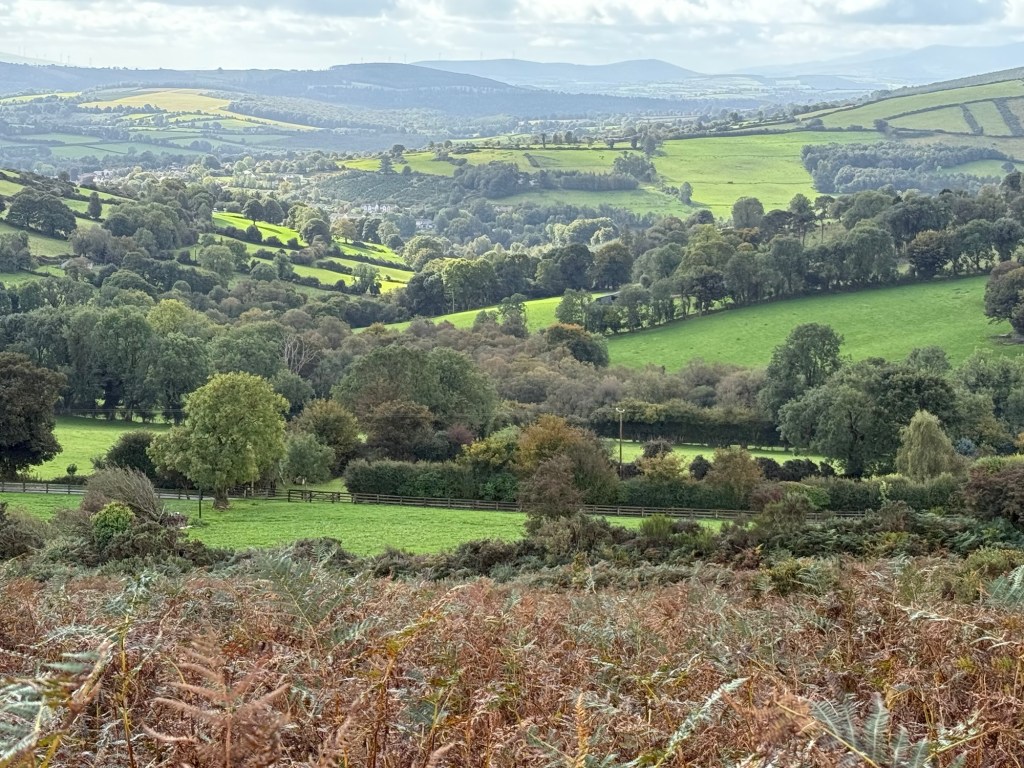
We finished the trail yesterday, and what a gorgeous day it was. We certainly saved the best for last, very spectacular views. Hope my pictures do it justice

we spent the day with the knowledge that it was going to start raining at about noon. We had 24 KM to go and 800 metres in elevation.

We did not get into Enniskerry until 5 pm, and it still had not really started raining. Stormy, windy with a heavy mist, but no downpour, so we feel…. We got away with it.
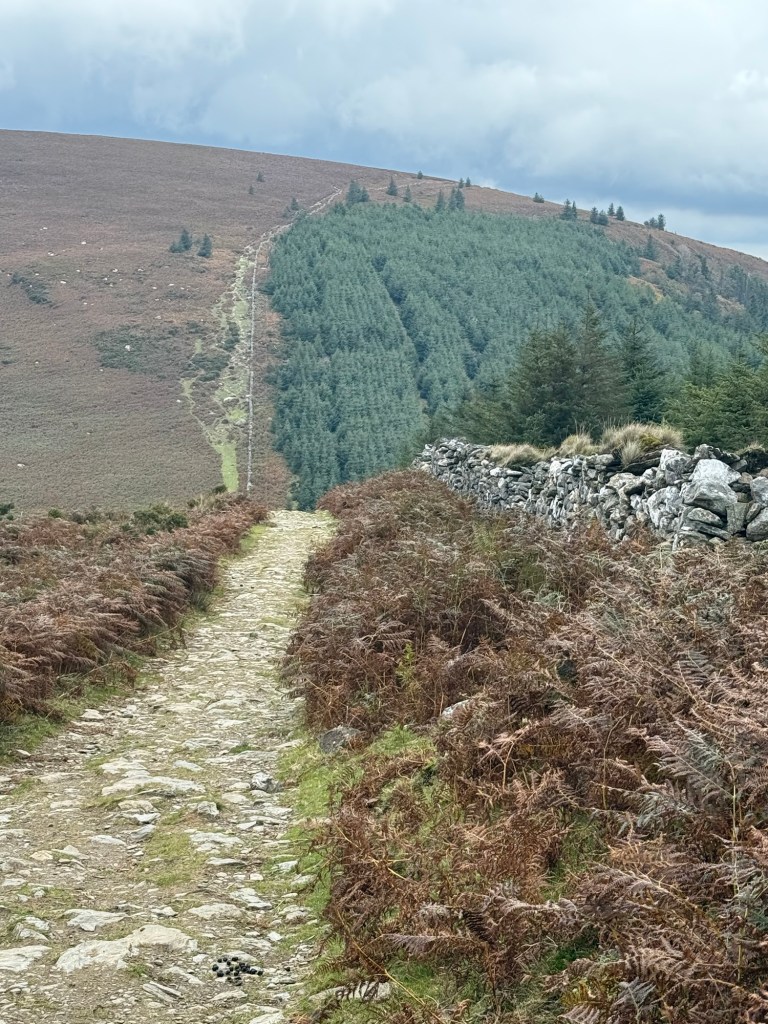
The last part we climbed and climbed and saw this at what we thought was the top….nothing…..ness.

When the weather is like this it is very hard to know where the top is, which is likely a good thing, it was like more mountain kept appearing like an escalator going down while you are going up.

This is Lough Tay, also known as lake Guinness with its black colour and white beach at one side…can you see it?

Ken has been faithful about supporting the Guinness industry by having a Guinness draft each day. I guess no blog about Ireland would be complete without some information about Guinness. Guinness is a stout that originated in the brewery of Arthur Guinness at St James Gate Dublin in the 18th century. It is one of the most successful alcoholic beverage maker in the world.

So this all started in 1759 in Dublin where he signed a 9000 year lease at 45 pounds per year.

On a recent search I have made on google, I found at least 3 film representations of the Guinness family. One of which is called “the house of Guinness” and is streaming on Netflix.

I thought I would look up the Guinness connection in Canada

It turns out that the engineer interesting in building what is now called the Lions Gate Bridge in Vancouver (was first the 1st narrows bridge) convinced Walter Guinness to invest in the land on the north shore of Burrard Inlet. He purchased 4700 acres of West Vancouver mountainside through “British Pacific properties”. The Guinness family sold the bridge to the province of British Columbia in 1955 for 5,873.837, which was the original cost to originally build it.

There was a toll instituted by the Guinness family to cross the bridge, and this remained until 1963 Interesting since the Lions Gate bridge is likely as well known to Canadians as the Golden Gate Bridge is to Americans.

Back to Ireland……

We are now in Bray drinking fancy coffees and the wind is howling with “storm Amy”. We got off the trains just in time

Warm and safe and cleaning clothes

Janet and Ken in Bray, Ireland

One more day on the Wicklow way…..

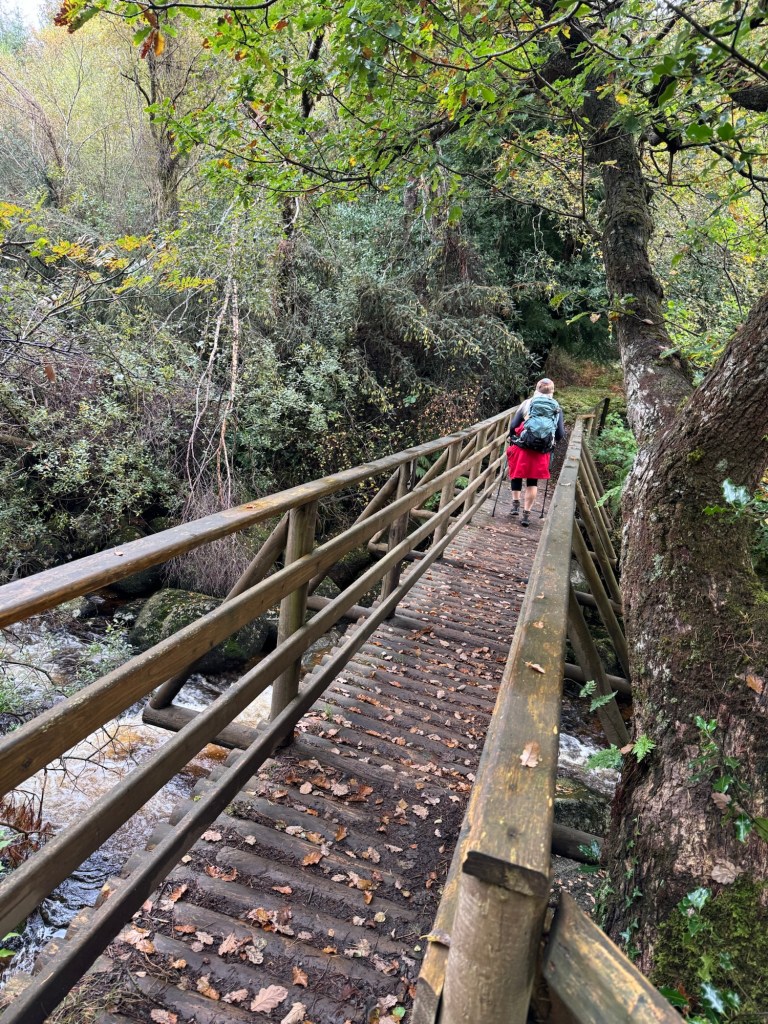
Well the past 3 days have been a bit underwhelming. We have had no more rain, The thing is that it is truly beautiful, large valleys lined with big healthy trees is kind of like what I look out at every day at home. I can see why others would find it more striking than we might…but we live in the forest.

So it is hard to wrap my brain around anything interesting along the way….. In fact there ARE some differences in the logging practices. Although I do not know exact details, but it sounds like the countries of the EU all have a commitment to maintain a certain percentage of their land as forests. They all have different percentages, but each has a commitment to maintaining what they have.

There are certain financial incentives to allow part of your property to be planted in trees. They take about 20 years to harvest. They also seem to be planting a wide variety of trees, including deciduous trees. …. Which certainly is a good plan for forest fire control.

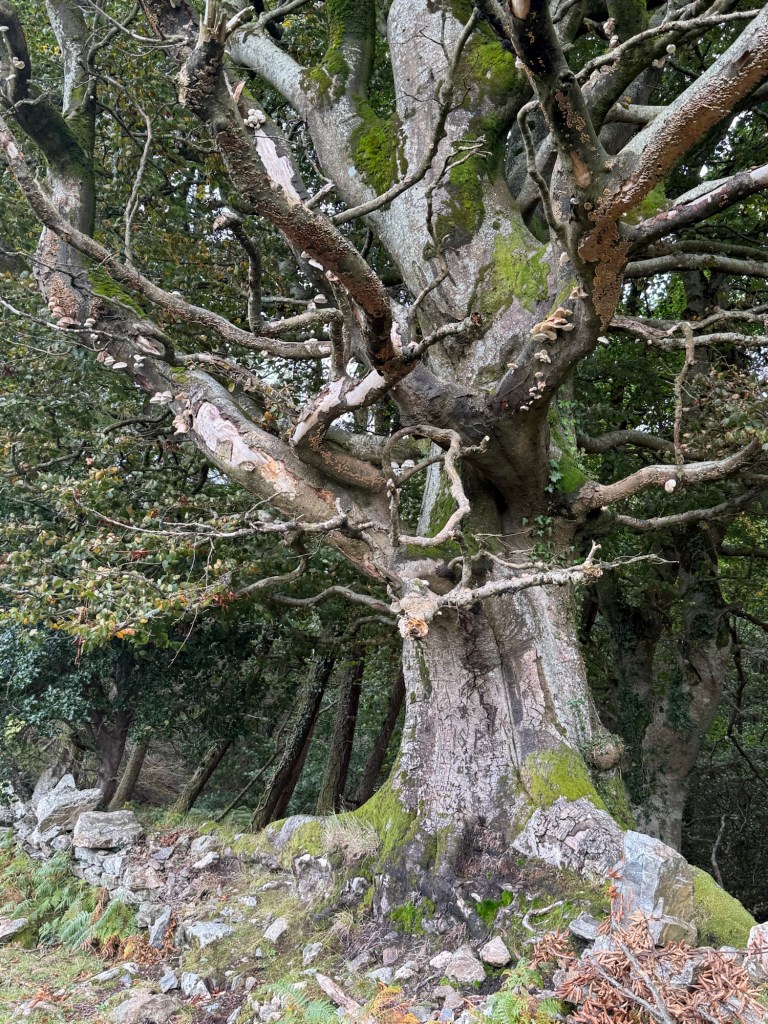
The trees certainly seem healthy.

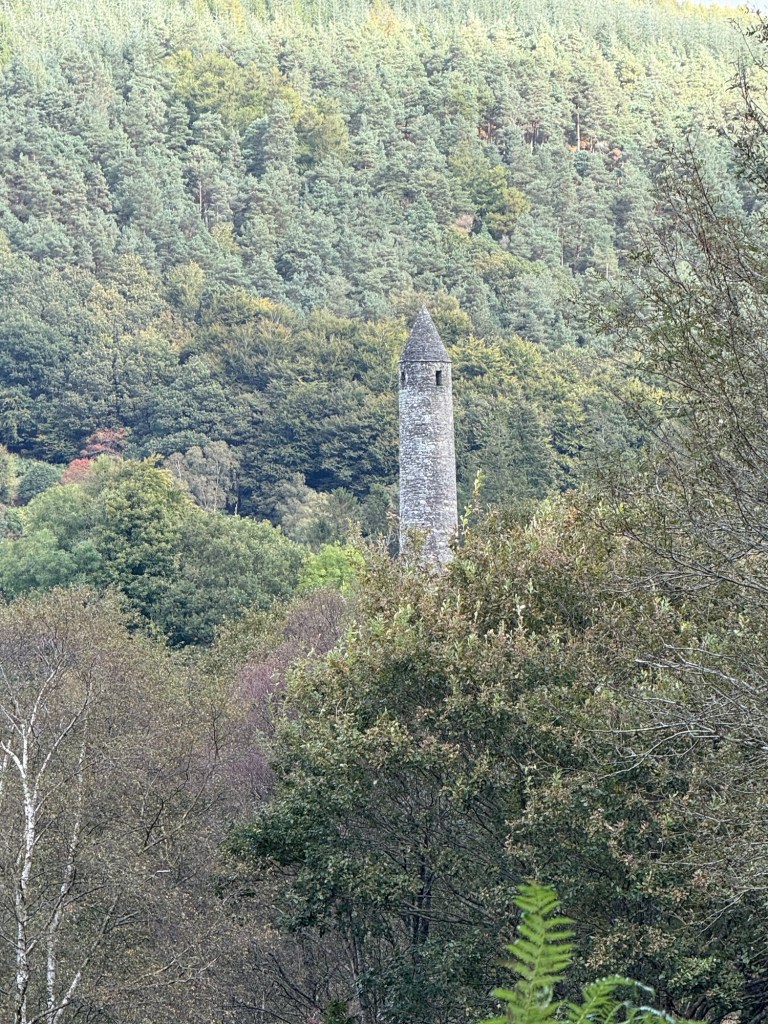
Irish round towers…..found mainly in Ireland, with 2 in Scotland and one on the Isle of Man. They were originally used as bell towers. They are generally found in vicinity of churches or monasteries. The door of the tower usually faces the west doorway to the church. This knowledge,where towers exist, has allowed searchers to determine where the remains of churches are, without excavation.

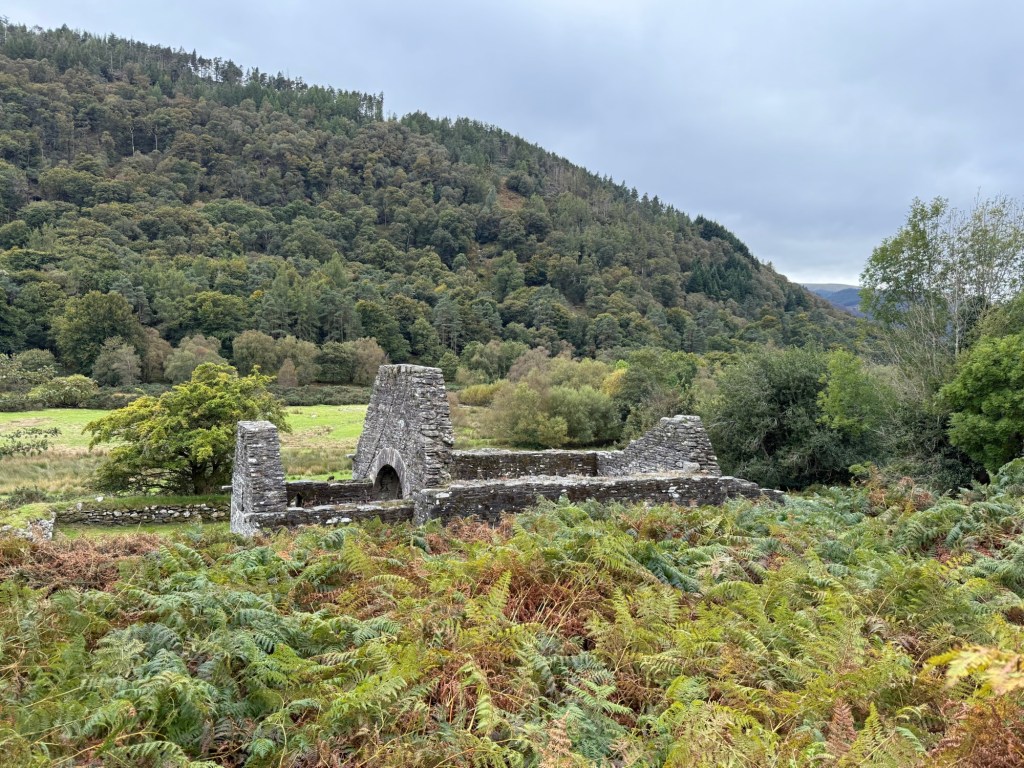
These medieval buildings were part of an early medieval monastic settlement founded in the 6th century. The order was Celtic Christianity

The dissolution of monasteries was a set of administrative and legal processes between1536 and 1541, when Henry Vlll disbanded all catholic monasteries, convents and friaries in England, Wales and Ireland, seized their wealth, and destroyed their buildings. Much of the funds raised by these actions went towards Henry’s military campaigns of the 1540s

There was a similar process taking place in Europe and Scotland but led more by the mass discontent among the common people against the powerful and wealthy ecclesiastical institutions.

Personally I find it interesting that the roofs of these buildings survived all this time, made of stone rather than wood. It seems that the steep pitch is how they were able to make the roof of stone.

Saint Kevin who founded this monastery, was an interesting guy, should you choose to look him up

So today will be our last day on the Wicklow way, and we both feel in great shape after all of that climbing. We have climbed almost 3 KM in elevation over the 110 KM we have done, but most of it has been gradual, and it has seemed easier as we have gone along. I would say that this has been a great way to see part of the wilderness of Ireland, but we feel we that we have enjoyed in our past walks the small villages you go through, and people you see along the way. The isolation and the quiet would clearly be something that others might enjoy, but we live in isolation and quiet……. The getting to and from the trail to the lodgings have been complicated. Some places have worked like clockwork, others not so much. Yesterday was supposed to be our shortest day, but turned out as long or longer than the rest. The turn to our lodging from the trail was 2KM. And there were no amenities at the place we were to stay at, so we needed to go to Roundwood, a town also off the trail, but 4 KM in another direction. We phoned the lodging and were told we could get a ride from town. So we walked the 4 KM to town, had a wonderful lunch, wine, Guinness…. Got groceries and then phoned for ride back to lodging. The guy said no can do….. he could not give ride for several hours…; So we walked the 6 KM to the lodging. I guess we ARE getting into good shape. Then I tripped and fell into stinging nettles … and am STILL itching…

Not to end on a negative note….. This was in the Wicklow national forest and a display of the more common minerals in the area…kind of cool

Lots of love …Janet and Ken

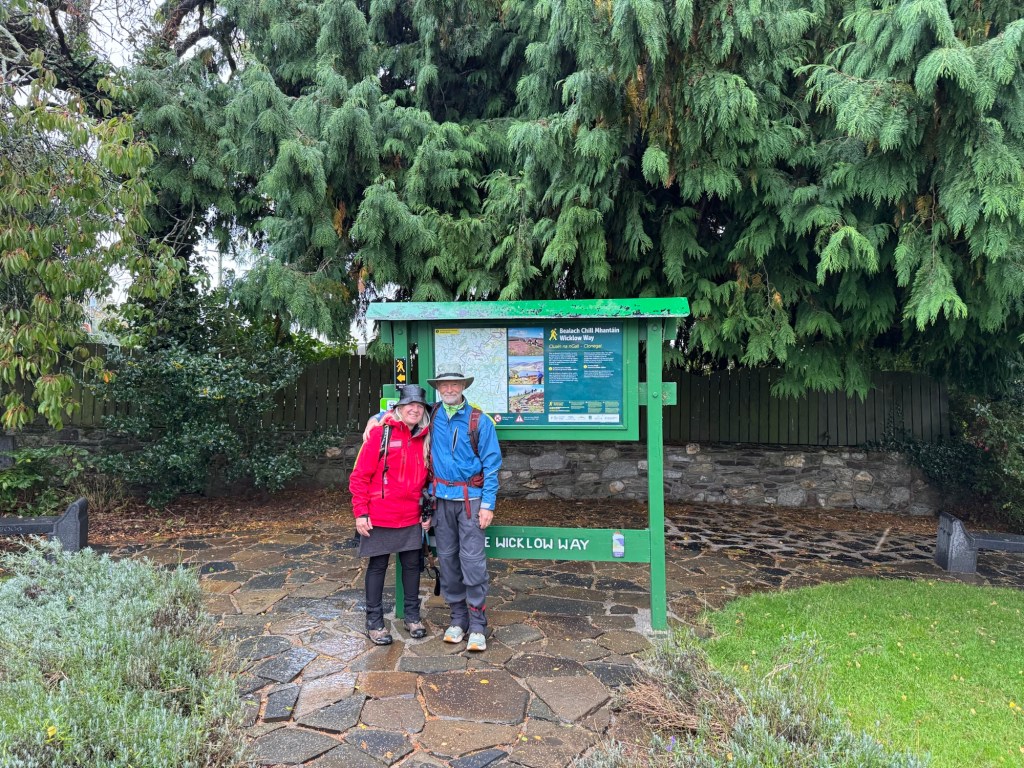
The Wicklow Way….the beginning anyways

It may not show here…. But it is pouring rain, and the taxi driver offered to take a picture of us at the beginning of the Wicklow way. It seemed ridiculous at the time, but now, it more seems like evidence. It was not like we were going to take our phones out of their dry pockets any time over the next three hours…. It poured for the first 3 hours of our first day, a time when we both questioned what the hell we were doing. Flying half way around the world so we could walk uphill in the pouring rain.

There is basically almost no accommodation along the Wicklow way. It is a trail/path/road pieced together to pass through the Wicklow mountains, heading north from Clonegal to Dublin … or the other way around. The accommodation is basically a group of bed and breakfasts that work together with the trip planners to pick up and drop off people from places along the trail and then take then back where they left off the next day.

Our first B&b in Bunclody
And a very warm welcoming committee

The rain had lightened at about half way along and by the time we ended there was not rain at all and we vaguely remembered why we came.

The first night we left the trail to walk 2.5 km into Shillelagh. (Yes the town where the Shillelagh originated. Gorgeous town, only 300 people.

Fortunately there is a bar/ B&B centrally where a lot of the hikers stay. Instead of the regular breakfast room, there was a large room with a large table and a well stocked fridge and pantry. The host just said to help ourselves…. And to make sandwiches for the next day as well. We met a couple of guys who were from Scotland. The older man said that he and his son in law were doing the hike in honour of his daughter and Hussain’s (the son in law) wife. She had died recently of a pituitary cancer. Hussain was originally from Iran, and had lived in Scotland for 20 years. They felt he was likely the first Iranian to do the Wicklow way.

There are others along the trail who are tenting, which seems to be more in line with how the trail was set up. There are essentially very few amenities along the trail. In fact the only place along the trail so far that was an actually a business, was a bar called the dying cow ….. So far we have always found a place for dinner, and breakfast is provided so only lunch to worry about. We DID get supplies in Wexford, so are stocked for another day with lunch ….sandwiches, but we hope by then to find a store.

It really is a beautiful hike when you get out of the clouds.

The trails are all lined with gorse …. (The scourge of the Oregon coast). According to legend, Lord Bennet was the one to name Bandon (a town on the Oregon coast where we lived for 13 years). He named it after a town in Ireland called Bandon, and brought with him a gorse plant being his favourite to remind him of his home land. And ……Gorse went on to destroy many parts of the Oregon coast, as well as the cause of a fire that destroyed Bandon (gorse burns like Rocket fuel). There were those who questioned whether he was really a lord, but I guess half way around the world, who would know ? 🙂
Some examples of the horrible plant.
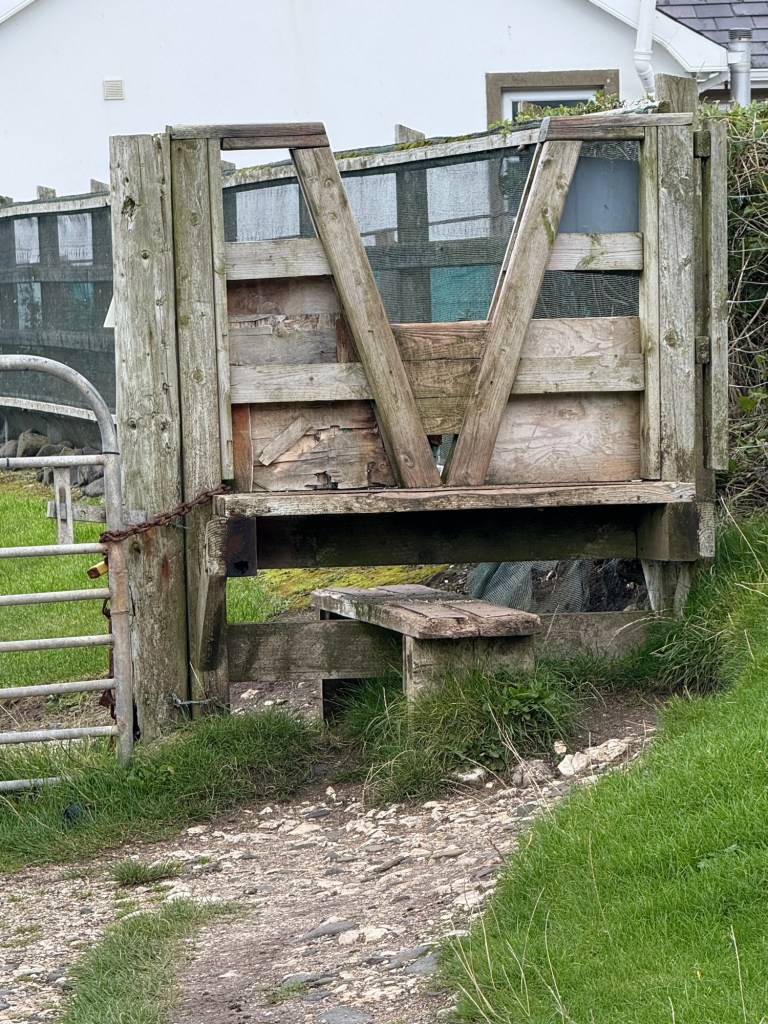
A unique stile, every area has different ones
From the northern coast
Another variety

I guess it just goes to show that there is more than one way to climb a fence

So starting today on our third day of the Wicklow way, we will pass the half way mark.

Bye for now Janet and Ken

Wexford, where the opening scene in saving private Ryan was filmed (Normandy beach scene)

It was actually the thin spit of land in the distance. Other claims to fame…a place that Oliver Cromwell stormed the town in 1649, October, during the Cromwellian conquest of Ireland at around that time. From all I have read, Cromwell was not a friend to Ireland.
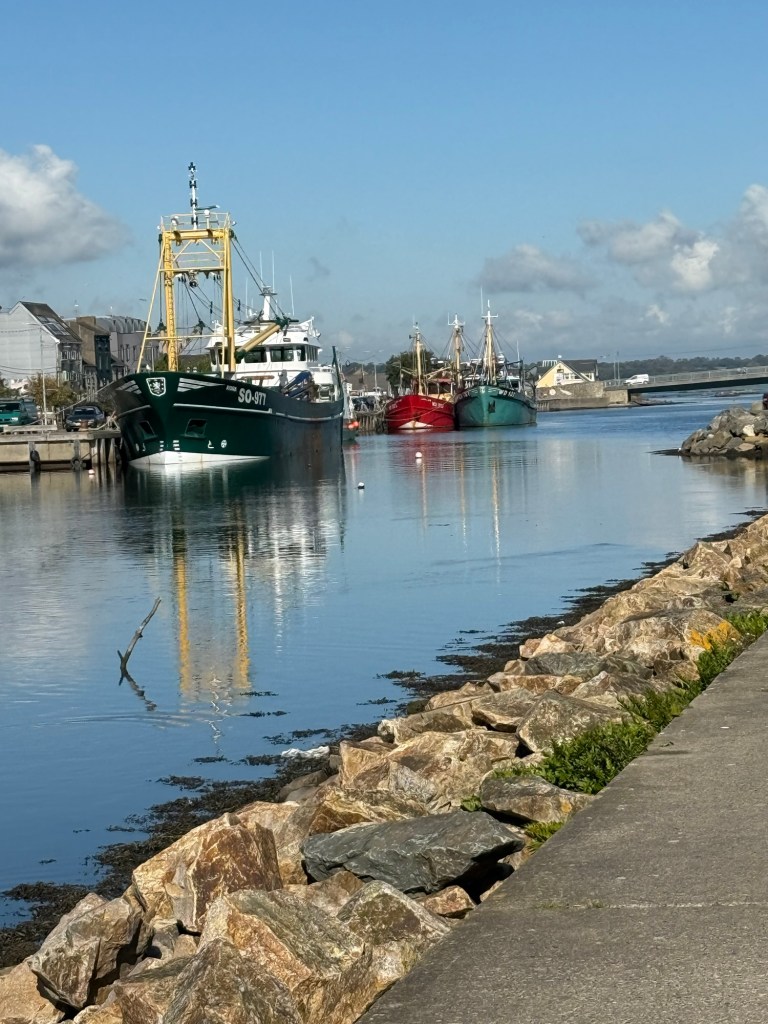
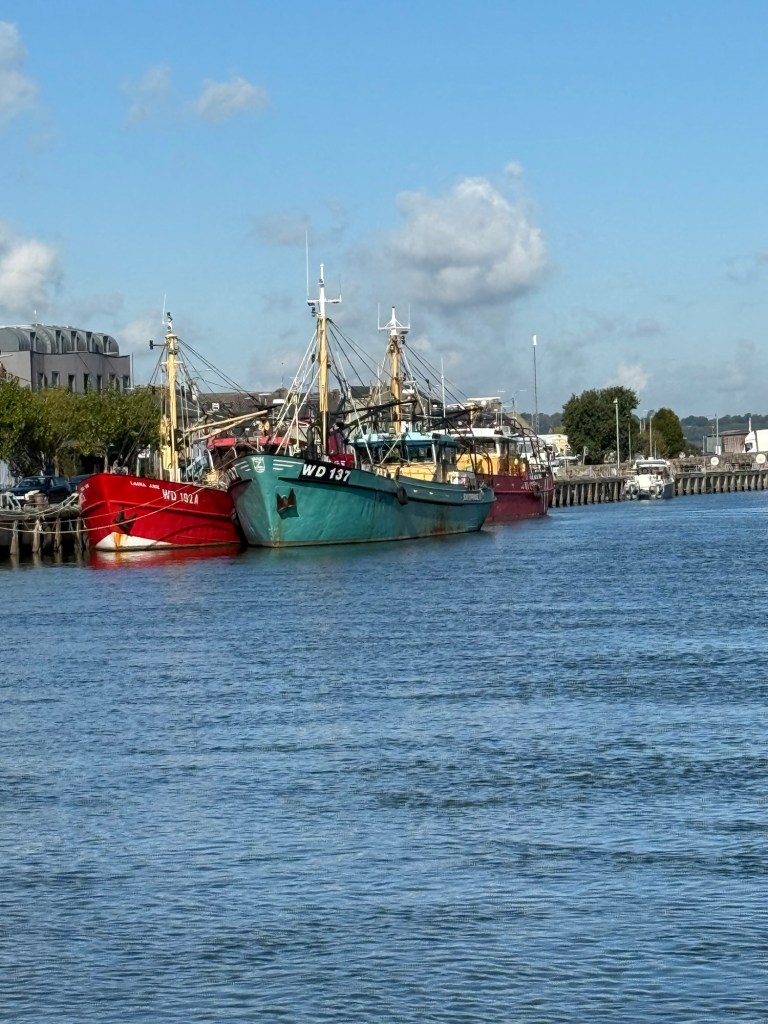
Wexford harbour.

The town dates back much further than that though. There was a siege of Wexford in 1169 and was the first clash of the Anglo-Norman invasion of Ireland. The seaport of Wexford was somewhat independant at that time and were Norse-Gaelic. Wexford surrendered and the surrounding area became the first Norman colony in Ireland.

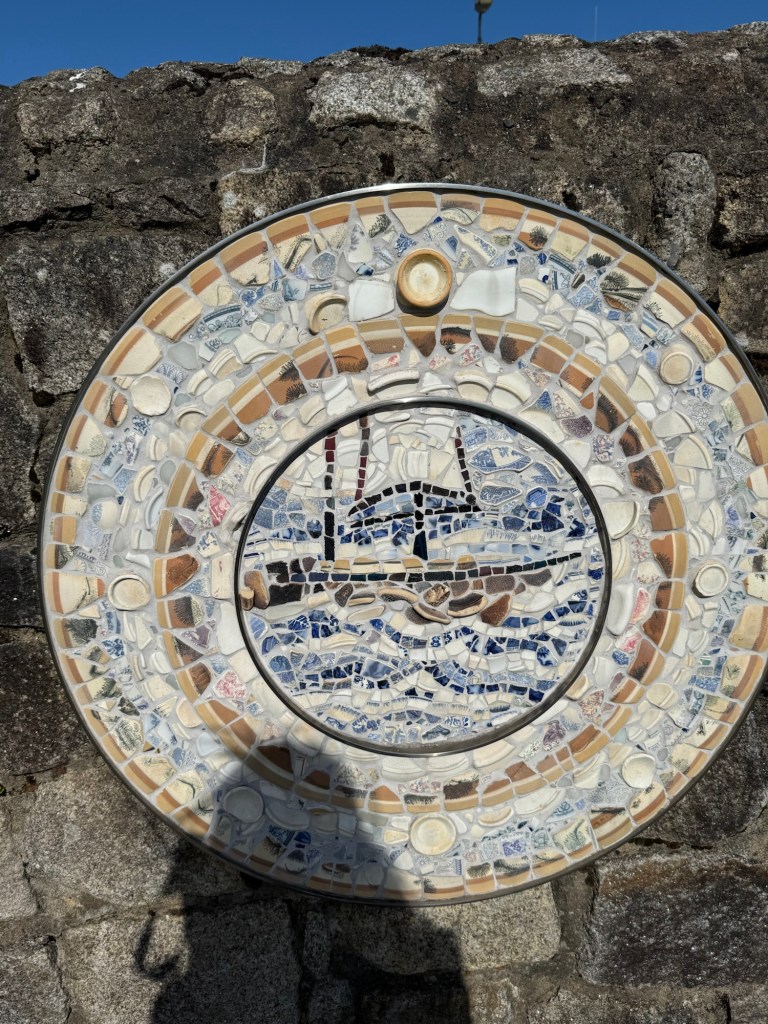
Beautiful art work made from broken ceramic dishes that appear to be tumbled after being broken..look am like a fun hobby

The town dates back much further than that though….. Ireland was inhabited some time shortly after the ending of the last ice age. (10,000-8000BC). Rough estimates place the first humans in county Wexford between 5000-3000 BC. It is felt by many that Wexford was the first area in Ireland to be inhabited by humans.

There are many findings from the Neolithic time. There are also many examples of standing stones in the county and one stone circle, kind of a big deal amungst archaeologists.

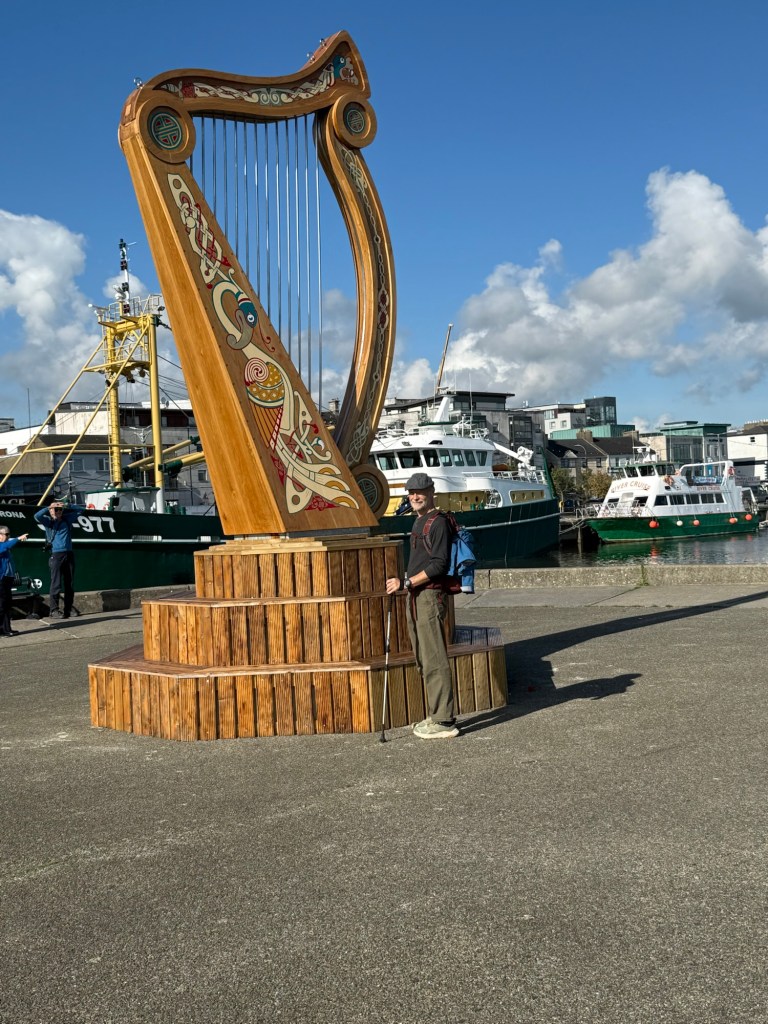
The harp, I guess we had thought was a Guinness logo, but turns out it is the other way….. the harp has long been a symbol of Ireland, but is no longer the flag. A green flag with a harp is the flag of the united Irishmen.

Ken and I are just hanging out here in Wexford waiting to go to Bunclody where we will start the Wicklow way, a 6 day hike up into the Wicklow mountains. It is an 81 mile hike that we are just realizing that most people start in Dublin and walk south towards where we are now, however we are all set up to start the walk tomorrow. (We are currently 140 KM south of Dublin)

Apparently 24,000 people walk the most popular sections, and it is the most popular of Irelands waymarked walks. It apparently gains 3300 metres in elevation … yikes….. that is like…. 3 KM up???

Needless to say we are a wee bit nervous about this….

The area we will be travelling will be remote, so we are planning ahead meals we can carry with us. There are apparently spots that there are no restaurants…..or stores.

We have the bus to catch soon

Bye for now….. Janet and Ken