
So after the causeway we walked towards Portrush and happened upon another castle along the way. The Portluce castle was a medieval castle that is now in ruins, however much of the structure still stands. It happens to have the ultimate in “moats” in that steep cliffs surround it. There IS a bridge to get onto the ‘island castle”. But if there is a giant on the bridge..you are hooped
It was built in the thirteenth century by Richard Og de Burgh, 2nd earl of Ulster. There were many different “owners.”,of the castle. In fact there was once a town adjacent the castle, built in 1608.
In 2011 an archaeological excavation discovered remains of the “lost town of Dunlace” which was razed to the ground in the Irish uprising of 1641.

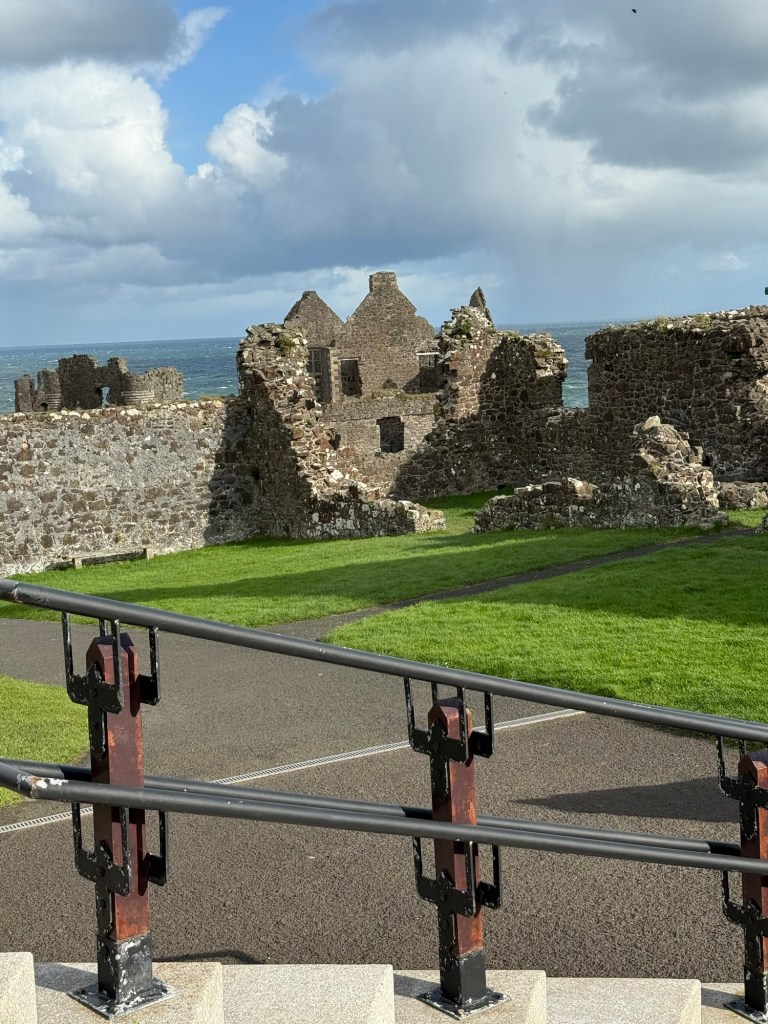
The castle was fought over for many years, Irish VS Scottish. Macdonalds vs Macdonnels, and finally came to an end in a storm in 1639, when the kitchen fell into the sea. It was abandoned after that.”
Then we came back to Dublin
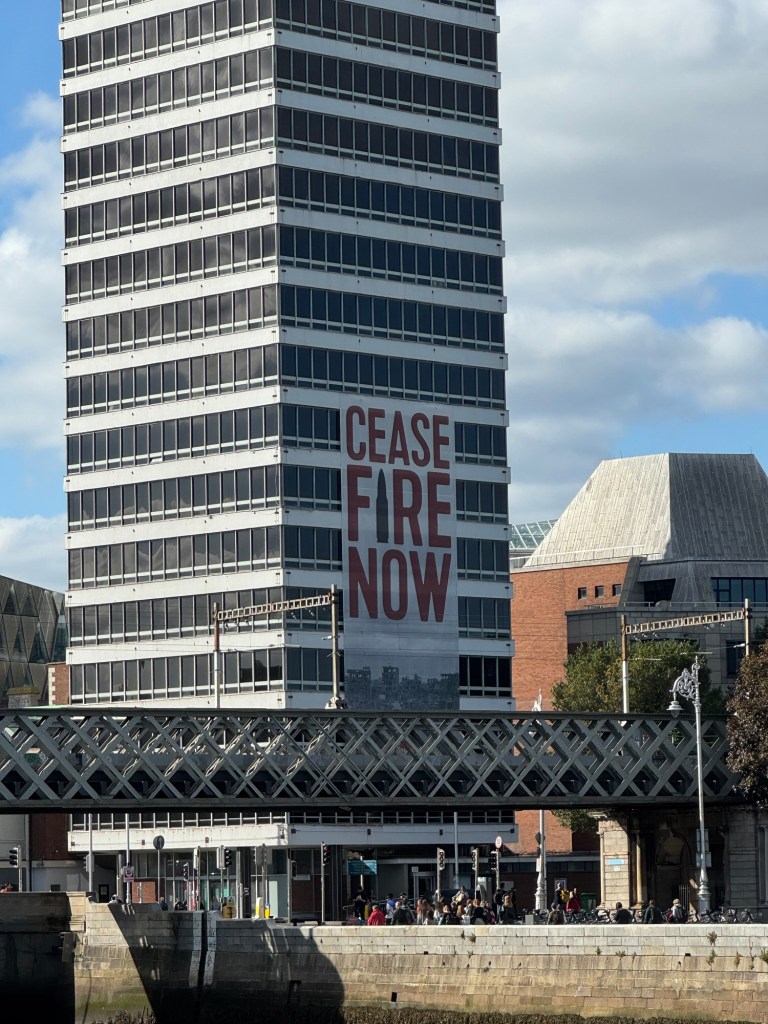
Gwen has purchased a “secret city tour” which is basically a scavenger hunt, introducing us to various historic sites in the city.
We were given clues to look for and some directions and finally a question that you had to answer to release the next hunt. Lots of little historical tidbits along the way.

The tour started at the spire, which is a very tall metal structure, which I did not take a picture of. I will not give away any clues in case someone chooses to do the secret city tour in Dublin.

The significance of the spire is actually more significant in what it replaced. It does have significance to the 1919 Easter uprising in Dublin. The Easter uprising, also known as the Easter rebellion was launched by the Irish republicans against British Rule in Ireland with the goal of establishing an Independant Irish republic. The uprising (another shibboleth) (those supporting the republicans would call it an uprising, while those who were against them would call it an insurgency) (freedom fighters vs terrorists) another shibboleth. You can see it is my favourite new word.

The first action of the uprising was to occupy the post office (the GPO). Outside the GPO was a large pillar called the Lord Nelson pillar. It was topped by a statue of Horatio Nelson. The statue rankled Irish nationalists as it honoured a prominent Englishman. The area around the statue was essentially a war zone during the uprising, and a bullet took off the nose of Nelson. The statue otherwise survived.

The statue continued to be controversial after the partition when Ireland became a free state, and many proposals over the years were made and unmade…. Nothing happened to the statue until March 8 1966 the statue was destroyed by a bomb at a time when the streets were empty. The statue crashed to the ground amid thousands of tons of granite. What was left was a 70 foot stump.
There was a scramble for souvenirs, and Nelsons head eventually made its way to a museum.


It was originally thought to have been the Irish Republican Army, which they denied saying that they were more interesting in destroying foreign domination than in Symbols of foreign domination. There was eventually a confession in 2000, but no charges were made.
Of interest, there is also a Nelson column in Montreal Canada erected in 1809, which is still standing. But I guess we Canadians were granted our freedom from the UK more readily than was Ireland.
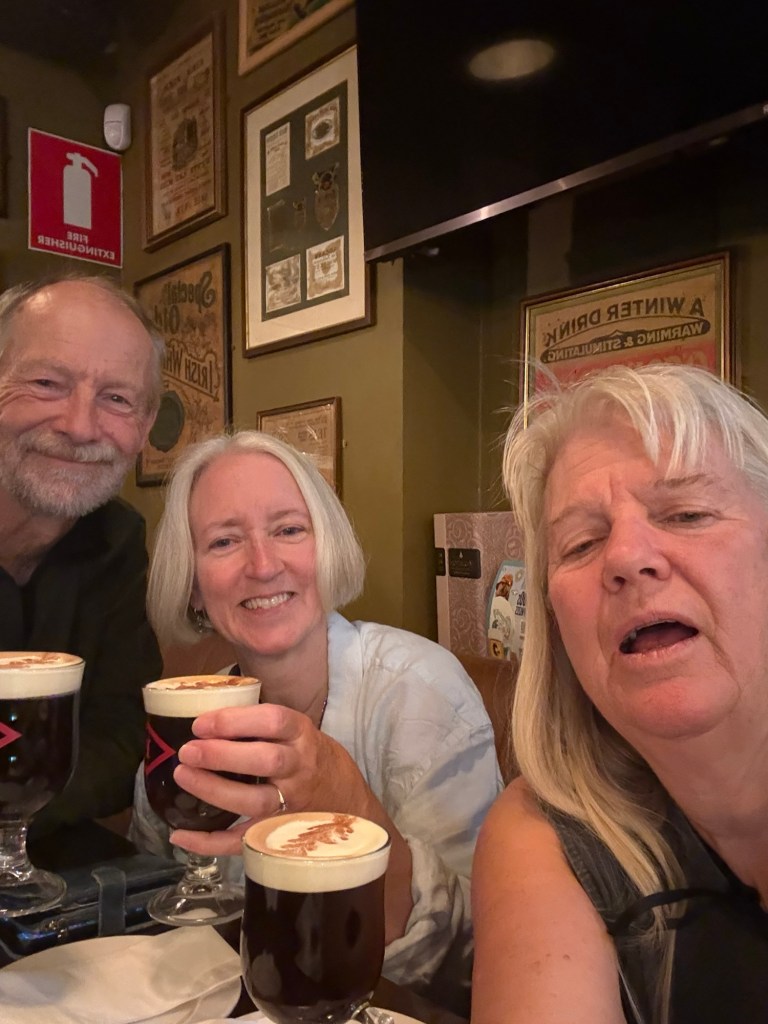
Gwen has gone home, and we SHALL miss her. Ken and I are on a train to Wexford, and in 2 days we begin the Wicklow Way hike.
Janet and Ken
 mymostrecentobsession
Cool pictures! I’m glad you guys are having a great time. It’s been the most beautiful summer here, scant rain but perfect temperatures.
LikeLiked by 1 person