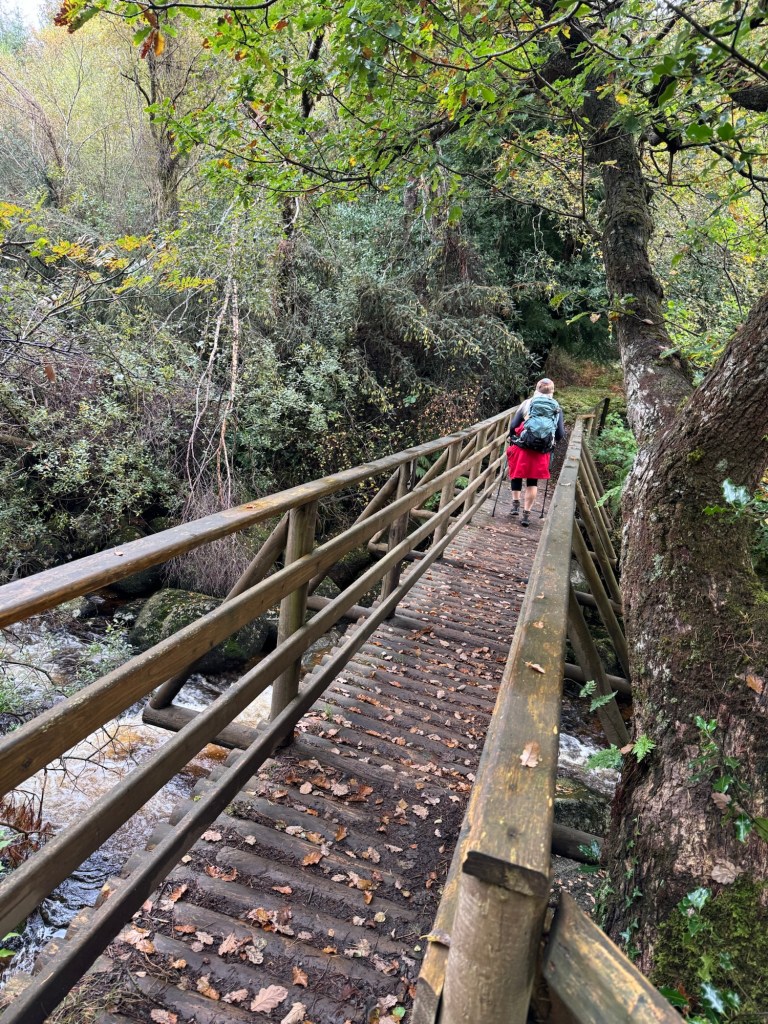
Well the past 3 days have been a bit underwhelming. We have had no more rain, The thing is that it is truly beautiful, large valleys lined with big healthy trees is kind of like what I look out at every day at home. I can see why others would find it more striking than we might…but we live in the forest.
So it is hard to wrap my brain around anything interesting along the way….. In fact there ARE some differences in the logging practices. Although I do not know exact details, but it sounds like the countries of the EU all have a commitment to maintain a certain percentage of their land as forests. They all have different percentages, but each has a commitment to maintaining what they have.


There are certain financial incentives to allow part of your property to be planted in trees. They take about 20 years to harvest. They also seem to be planting a wide variety of trees, including deciduous trees. …. Which certainly is a good plan for forest fire control.


The trees certainly seem healthy.

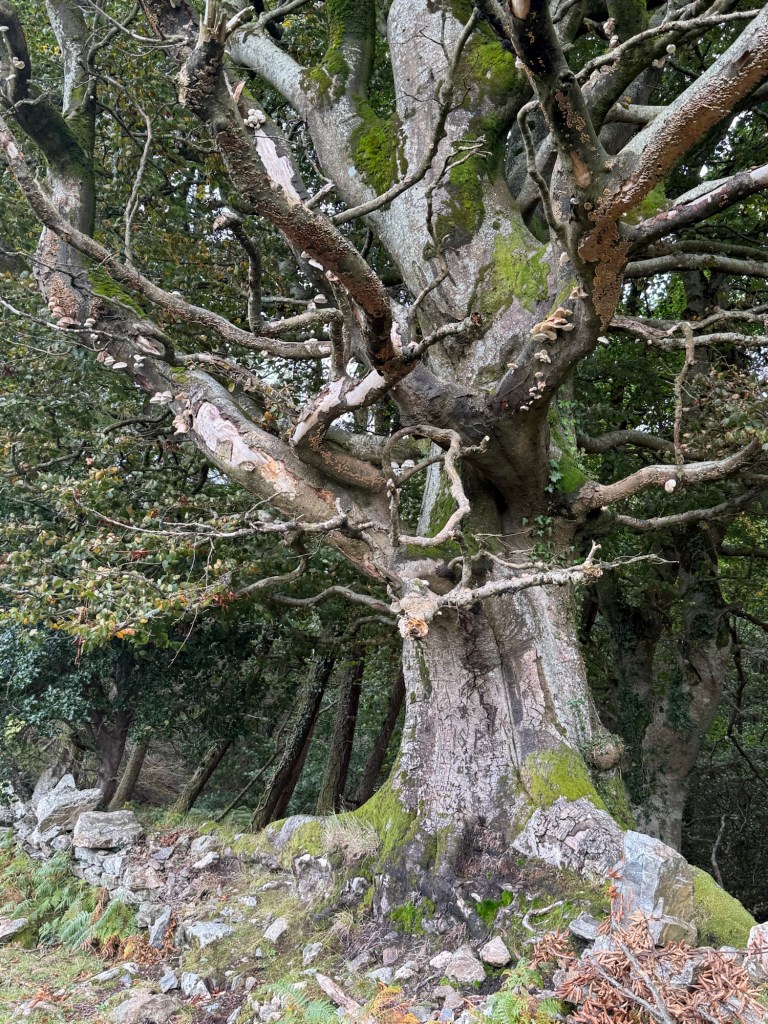

Irish round towers…..found mainly in Ireland, with 2 in Scotland and one on the Isle of Man. They were originally used as bell towers. They are generally found in vicinity of churches or monasteries. The door of the tower usually faces the west doorway to the church. This knowledge,where towers exist, has allowed searchers to determine where the remains of churches are, without excavation.
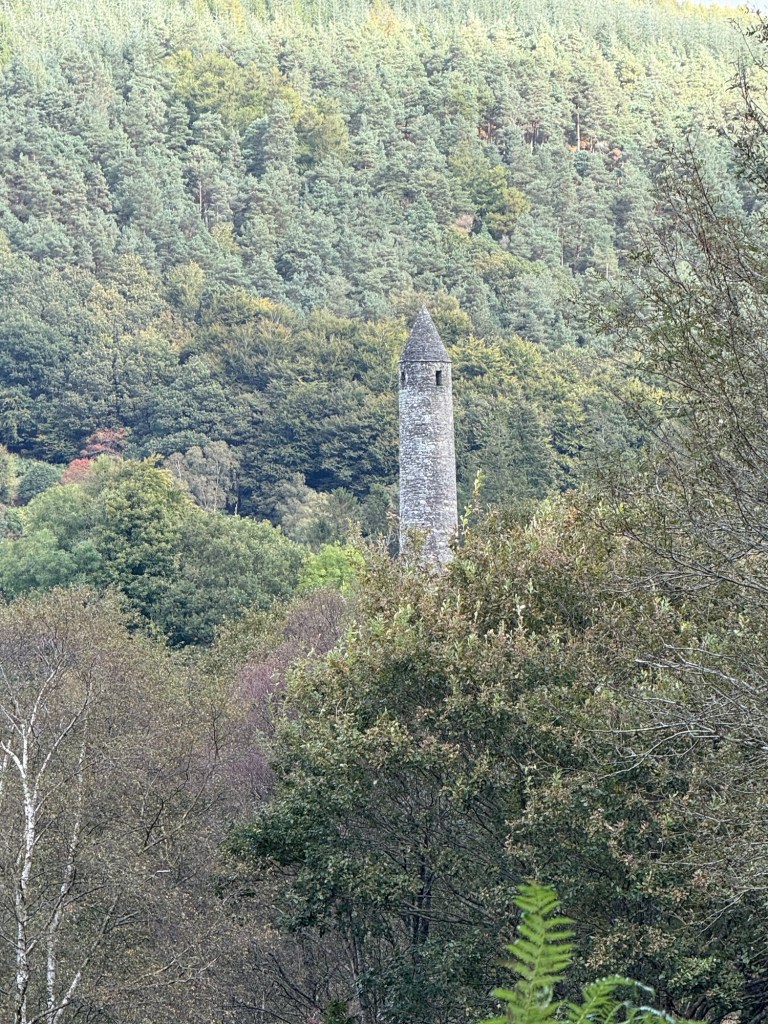
These medieval buildings were part of an early medieval monastic settlement founded in the 6th century. The order was Celtic Christianity


The dissolution of monasteries was a set of administrative and legal processes between1536 and 1541, when Henry Vlll disbanded all catholic monasteries, convents and friaries in England, Wales and Ireland, seized their wealth, and destroyed their buildings. Much of the funds raised by these actions went towards Henry’s military campaigns of the 1540s
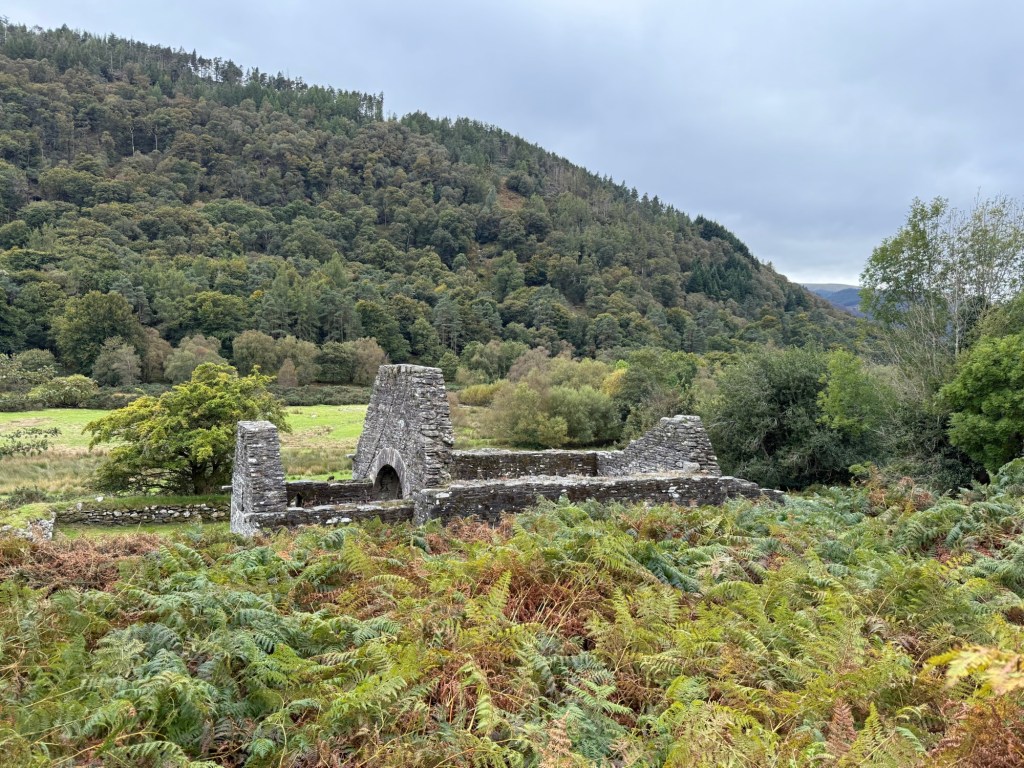
There was a similar process taking place in Europe and Scotland but led more by the mass discontent among the common people against the powerful and wealthy ecclesiastical institutions.
Personally I find it interesting that the roofs of these buildings survived all this time, made of stone rather than wood. It seems that the steep pitch is how they were able to make the roof of stone.
Saint Kevin who founded this monastery, was an interesting guy, should you choose to look him up

So today will be our last day on the Wicklow way, and we both feel in great shape after all of that climbing. We have climbed almost 3 KM in elevation over the 110 KM we have done, but most of it has been gradual, and it has seemed easier as we have gone along. I would say that this has been a great way to see part of the wilderness of Ireland, but we feel we that we have enjoyed in our past walks the small villages you go through, and people you see along the way. The isolation and the quiet would clearly be something that others might enjoy, but we live in isolation and quiet……. The getting to and from the trail to the lodgings have been complicated. Some places have worked like clockwork, others not so much. Yesterday was supposed to be our shortest day, but turned out as long or longer than the rest. The turn to our lodging from the trail was 2KM. And there were no amenities at the place we were to stay at, so we needed to go to Roundwood, a town also off the trail, but 4 KM in another direction. We phoned the lodging and were told we could get a ride from town. So we walked the 4 KM to town, had a wonderful lunch, wine, Guinness…. Got groceries and then phoned for ride back to lodging. The guy said no can do….. he could not give ride for several hours…; So we walked the 6 KM to the lodging. I guess we ARE getting into good shape. Then I tripped and fell into stinging nettles … and am STILL itching…

Not to end on a negative note….. This was in the Wicklow national forest and a display of the more common minerals in the area…kind of cool
Lots of love …Janet and Ken


so…. For next journey – more villages – or civilization at least. Funny – but that is also our boating preference – we prefer larger rivers or canals with villages every few km rather than small meandering routes where you are alone.
LikeLike